Showing posts with label green lifestyle. Show all posts

Saturday, January 29, 2011

Fuzzy Green Panda 12 – Chicken salad


Chicken Salad

Uses a microwave

350g skinless boneless chicken fillets

¼ to ½ English cucumber, sliced and halved

1 pineapple cut into pieces

1 ripe avocado pear cut into pieces

2 large tomatoes cubed

Half a small lettuce washed and shredded

2 to 3 tablespoons mayonnaise (or low fat mayonnaise and low fat yoghurt mixed)

Prick the chicken well (through the packaging if appropriate) and microwave for 5 mins at 900W.

Allow to cool. Cut into cubes and toss with the other ingredients. Serve with baby potatoes.

clip_image002

Friday, January 28, 2011

Green Fuzzy Panda 11


Holiday Chicken

(using a solar cooker and an optional backup source of heat)

This recipe is based on a potjie recipe by the Van Rooyens of Garsfontein. (1) The lemon peel adds zest to the dish. The recipe serves 4-6 people and can be served with a fresh salad and homemade bread. A flat cast iron pot or other black pot can be used.

clip_image002

Sauce

500ml low fat natural yoghurt

250ml dry white wine

10ml dried thyme

10ml grated lemon peel

1 packet cream of mushroom or cream of chicken soup powder.

Salt to taste

4 -6 deboned skinless chicken fillets

1 large onion, chopped

2 green peppers, chopped

1 small packet button mushrooms sliced in half

½ cup rice

200-300g sliced carrots

2 baby potatoes per person, cut in half

100g dried apricots

200g frozen casserole vegetables or green beans

Whisk the sauce ingredients together. Brown onions , chicken and green pepper in a little oil in a cast iron pot on electric stove or gas stove or Bioheat stove(optional). Add the rest of the ingredients. Pour the sauce over the top and replace the lid.

Place the pot in a solar cooker in the sun before 10am and leave until the potatoes are soft (3-5 hours depending on the weather). Can be placed in the sun before work and retrieved after. The solar cooker must then face north in that case. Serve with fresh bread and a green salad.

1. “Potjiekos” by Marlene Hammann published by Human and Rousseau pg 15

Green Fuzzy Panda 10


Granny’s Chicken

(uses a solar cooker only)

This recipe is a family favourite and is adapted from a recipe given to me by my mother-in-law. It is a simple no fuss recipe cooked in one pot. It serves 3-5 people.

clip_image002

1 skinned deboned chicken fillet per person

½ cup mayonnaise

½ cup chutney

2 cups water

1 pkt Brown Onion soup

40g rice per person

1 – 2 cups frozen casserole vegetables.

Place the chicken fillets at the bottom of a cast iron pot or black pot of suitable size. Mix the next four ingredients together and pour over the chicken. Add the rest of the ingredients and mix all together. Replace the lid and put the pot in a solar cooker facing the sun or facing north if you are going to be out all day. Serve with green peas and tomato wedges. Cooks in about 3 hours depending on the weather.

Friday, January 21, 2011

Green Fuzzy Panda 9


Budget Mince

(using a solar cooker and an optional backup source of heat)

This mince can be made in bulk and frozen in smaller portions for later use. The quantities given make for 16 people and can be divided according to your family size. You can add or subtract ingredients according to your family’s preferences.

2 onions, chopped.

500g lean beef mince.

¾ cup orange lentils, soaked overnight.

1 cup soya mince

1 cup water

4 carrots (grated) or courgettes or other vegetables of your choice

1 pkt beef and vegetable soup

2 beef stock cubes dissolved in 2 cups boiling water.

Salt and any other herbs and spices to taste.

Brown the onions and mince in a little olive oil in a cast iron pot or a large black pot (optional). Soak the soya mince in 1 cup water for 5 minutes. Drain the lentils. Add all the ingredients and stir well. Place the pot in a solar cooker facing the sun or facing north for at least three hours although it will do no harm if kept in the sun all day. If the mince is a bit watery, thicken with Bisto or corn flour. Divide the mince into containers according to the size of your family and freeze for later use.

Wednesday, January 19, 2011

Green Fuzzy Panda 7: The Solar Cooker


Solar cooker

The solar cooker I use is a Sunstove, available from Margaret Bennett . e mail at sunstove@iafrica.com.

This method of cooking is the only one which is totally free. It is extremely easy. Place the food in a black pot, place in the solar cooker which is facing the sun or facing north if you are going to leave it for a long time.

The Sunstove comes with a pot and an instruction booklet, including recipes. It is ideal for one pot cooking, stews, vegetables, rice, pap, mince dishes. It is not suitable for dishes requiring rapid boiling, eg pasta, frying or baking (except meringues)

A black pot is preferable, but not essential. The sunstove cooks even if there is only 30 minutes of sun per hour. Food needs to be put in the sun before 10am as that is the best time for cooking. It is also possible to place the food in the sun before work and leave the sunstove facing north. It will be ready by 2pm but still warm by 4pm. It might just need a bit of reheating later in the day.

Advantage of a solar cooker

  1. Free energy
  2. It is light and so portable and can be moved to where the sun is, or taken camping etc.
  3. It is almost impossible to burn food.

Disadvantages of a solar cooker

  1. The cooker only works when there is enough sunlight, therefore not at night and not in the rain. It cannot be used as the only source of cooking. It can only be an additional source of cooking and will always require a back-up. However, when it can be used it saves electricity or wood or other fuel.
  2. Food left unattended for long periods can be stolen. (Of course if there are grannies in the community they can sit near all the solar cookers and guard the food and cookers)

General Guidelines

  1. The sunstove is designed for a family of 4. It can take more than one pot but if cooking for a larger number of people it will be necessary to use more cookers.
  2. For cooking fresh vegetables it is not necessary to add water. Food will cook in its own juice.
  3. Food must be placed in the sun before 10am in the morning for best results.
  4. (From Sunstove 2000 Booklet)(2)

a) You will need twice the normal cooking time or a bit longer

b) Stews and casseroles use less water.”

g) food will cook quicker in 2 smaller pots than one big one. Don’t leave a lot of airspace above your food.”

  1. The pots will get extremely hot and the use of a pot holder or oven gloves is necessary for removing the pot from the solar cooker.

Temperatures reached by the Sun stove

Dec 29 2009                                    

Partly cloudy, Max 26°C                         

Time           Temp °C                                                                           

9.00

40

9.30

50

10.10

90

10.55

120

11.20

120

12.00

120

These were my two extremes. When there was 50% cloud cover the stove reached a maximum of 95°C, 25% cloud cover it reached a maximum of 110°C. Cooking with more than 50% cloud was not very successful and another source had to be used to complete the cooking.

Sunday, January 16, 2011

Green Fuzzy Panda 5. Make your own hot box


You will need: A square box or container at least 5 cm larger than your pot on all sides, 2-3 metres fabric, newspaper, small pieces of polystyrene as used in packing.

Method: Take the following measurements: diameter of pot = a, height of pot = b, Height of box = c , side of box = d.

Cut out 2 squares of newspaper, one with sides of a, one with sides of d. Fold them both diagonally in quarters and cut out one quarter of each.

On a large sheet of newspaper cut out the following pattern.   Add 1,5 cm all around for seams.   Using the newspaper pattern, cut 4 identical pieces from the fabric.

clip_image001[18]

Sew all 4 pieces together, right sides together , leaving one diagonal open. Turn right side out. Half fill the cushion with the polystyrene and then close up the opening. Arrange the cushion in the box with the base (d) downwards. Form the narrow top part into a nest inside the cushion. It should be just big enough for your largest pot.

Make another cushion for the lid out of two square pieces of material the length of the base of the box. Fill with the polystyrene. Alternatively you could use a pillow as the lid.

DSC00287


Tuesday, January 11, 2011

Green Fuzzy Panda 3

Simple ways to save power.

· We are all aware of the fact that the pot or pan is not hot enough as soon as we switch the hot plate on. It takes a little while for the plate and pot to heat up. In the same way, it takes a little while for them to cool down so if we switch off the power about 5 minutes before the food is cooked, it will still continue cooking in the hot pot on the hot plate.

· Use the kettle sparingly. A kettle is rated at about 2 kilowatts. Boil only enough water for your needs. If you are making one cup of coffee, boil one cup of water. This reduces the amount of time the appliance is working. Another option is to use a thermos flask or pump pot. Boil a full kettle and then pour any unused boiling water into the pump pot. For the next two hours you can use the water for making coffee or if you need it really boiling for tea, pour it back into the kettle and it will take much less energy to heat it up the last couple of degrees.

· Use the microwave instead of the hot plate as often as possible. Most food cooks faster in a microwave.

· Other options are a pressure cooker (which cooks faster because the high pressure enables the temperature to get much higher) an electric frying pan or steamer, where different foods can cook at the same time by stacking up on top of one another.

· On an electric stove top, use pots and pans with flat bottoms to maximize surface area and use a hot plate the same size as the pot.

· If you have to use the oven, make sure the seals fit properly to reduce heat loss. Test by closing a piece of paper between the door and the oven. If the paper slips out, you could be losing a lot of heat. Replace the seal to avoid wasting energy and money.

· Cook more than one dish in the oven at a time or one pot dishes on a stove top.

· Consider cooking in bulk and freezing, using the microwave to heat the dish.

· Thaw food overnight in the fridge rather than in the microwave.

· Keep the lid on when possible to reduce heat loss

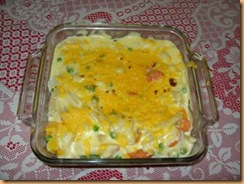
· Dishes requiring browning in an oven eg macaroni and cheese use a lot of electricity just to get the cheese topping browned. Five minutes under a TV grill will give the same result with far less energy consumption.
clip_image002

Macaroni Cheese browned under a TV grill

  • It costs almost the same to buy a roast chicken from most supermarkets as a fresh one. You save not only the electricity that you would use to cook it, but also the human energy you would use.
  • Use insulation. We are so used to the concept of warming up food quickly in a microwave that we no longer try to keep it hot. Any insulating material wrapped around a pot or dish will help keep it hotter for longer. Examples are – newspaper, corrugated cardboard, blankets, packaging materials. The Wonderbox is an example of how food can not only be kept warm but continue to cook without the use of any electricity at all.